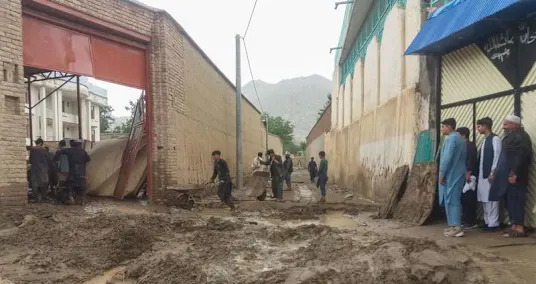
At least 61 people have been killed and 116 injured across Afghanistan since March 26 due to heavy rainfall, floods, landslides and lightning strikes, the Afghan government said on Saturday.
At least four people were still missing after floods affected thousands of families and damaged 2,448 houses, Afghan government spokesman Zabihullah Mujahid said in a post on X.
In addition, thousands of hectares of cropland was also destroyed, posing serious risks to rural communities who rely on agriculture for their livelihoods.
Deadly flooding has struck Afghanistan repeatedly in recent years, causing significant loss of life, injuries and widespread damage to homes, infrastructure and agricultural land.
Extreme weather events such as flash floods and droughts are increasing in Afghanistan, which experts link to the climate crisis.
Despite having a negligible carbon footprint, the country ranks among the most climate-affected nations and remains ill-prepared to cope after decades of conflict, poor infrastructure and a struggling economy, compounded by recent earthquakes and severe flooding.
LATEST POSTS
- 1
 Investigating Inside Plan and Home Style: Change Your Residing Space
 - 2The Beginning Of The End For Fossil Fuels Can Start In Colombia
- 3US FDA declines to approve Corcept's drug for rare hormonal disorder
- 4IDF continues counterterrorism operations in Gaza Strip, including destroying terror tunnels
- 5Sixteen Kenyans missing in Russia after army recruitment




- 'The Housemaid' movie with Sydney Sweeney and Amanda Seyfried premieres this month. What the stars have said about the psychological thriller.
- A definitive Handbook for Securities exchange Money management
- Intriguing Strange Cruising Objections you Should Visit
- Picking the Right Home Machines: A Commonsense Aide
- After toilet and email issues, Artemis II astronauts fire engine to head for the moon
- Top 15 Supportable Design Brands Coming out on top
- Artemis II astronauts find hidden Easter eggs as they close in on the moon
- Native artists in Texas and Mexico shared their vision of the universe for 4,000 years, ancient murals suggest
- How mountain terraces have helped Indigenous peoples live with climate uncertainty