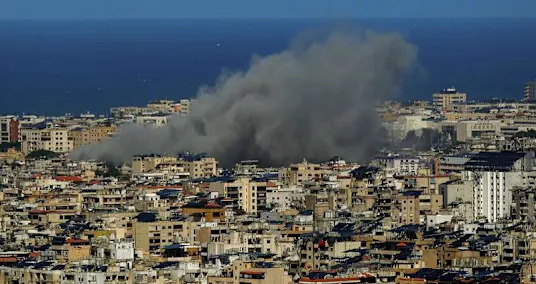
The UK is forecast to experience weaker growth and higher inflation due to the impact of the war in the Middle East, according to an influential global policy group.
It means this year the UK is expected to have the second-highest inflation rate among the G7 group of advanced economies - at 4%, the Organisation of Economic Co-operation and Development (OECD) said.
The body has also downgraded forecasts for many of the world's biggest economies due to the US-Israel war with Iran.
A prolonged conflict could trigger "significant energy shortages" globally, it warned, while if the sharp rise in fertiliser prices is sustained crop yields will be impacted and food prices will soar next year.
The OECD's new forecast for UK inflation is up from the rate of 2.5% it had predicted at its previous report in December.
It then forecasts inflation to drop to 2.6% in 2027 - still up from its previous projection of 2.1%.
Economic growth is now forecast to be 0.7% in the UK this year, down from 1.2% it had previously expected. Its forecast for 2027 is unchanged.
In early March the government's official forecaster, the Office for Budget Responsibility (OBR), cut its expected growth rate for 2026 to 1.1% from the 1.4% it predicted in last year's Budget.
But this forecast was made before the Iran war, which the OBR said could have a "very significant" impact on economies.
Among G7 countries, only the US is predicted to have higher inflation than the UK in the OECD's forecast, while only Italy is expected to see weaker growth.
Global growth is expected to fall to 2.9% this year before nudging up to 3% in 2027. And inflation across the G20 countries is predicted to be 4%, up from previously expected, dropping back to 2.7% next year.
The OECD said its predictions depend on the assumption that the current energy market disruption eases, with oil, gas and fertiliser prices falling from summer onwards.
It said measures from governments to cushion households from the impact of higher energy prices "should be timely, well-targeted on households most in need and viable firms, preserve incentives to lower energy use and have clear expiry mechanisms".
Policies that improve domestic energy use and lower reliance on imported fossil fuels over the medium term were a priority, it added.
The forecast comes as UK clothing retailer Next warned it was likely to have to raise prices for customers if the Iran war persists.
It said overseas sales had been strong up to when the conflict in the Middle East broke out, and instability may continue to restrain growth in that region.
LATEST POSTS
- 1
 Surge of off‑lease electric vehicles expected to drive down used EV prices
 - 210 Demonstrated Tips to Dominate Video Altering on Your Cell phone in 2023
- 3Saudi Arabia says it intercepted 7 missiles, debris falls near energy facilities
- 4‘RuPaul's Drag Race’ Season 18: How to watch without cable, premiere time, cast list and more
- 5Study reveals how fast weight returns after ending GLP-1 drugs





- The Best Web-based Courses for Expertise Improvement
- Two Israeli infants among wounded by shrapnel in overnight Iranian missile barrage
- NASA Artemis II tracker: Crew less than 60,000 miles from moon ahead of Monday flyby
- The Solution to Ecological Protection: Saving Nature for People in the future
- 2024's Hot Games: Must-Play Titles of the Year
- What's Your Number one Superhuman Film Made?
- Volcanic eruption led to the Black Death, new research suggests
- Two UN peacekeepers killed in explosion in Lebanon
- An Aide On Upgrading Your FICO rating