Latvia will seek an emergency meeting of the United Nations Security Council in response to Russia’s latest heavy attacks on Ukraine, Latvian Foreign Minister Baiba Braže said on Friday.
Russia earlier carried out renewed large-scale airstrikes on Ukraine and said it had, for the second time since the start of the war, used its nuclear-capable Oreshnik intermediate-range missile in stike on the western city of Lviv, not far from the border with Poland.
"Latvia will request an extraordinary meeting of the UN Security Council in response to Russia’s barbaric attack against Ukraine, including using an intermediate range ballistic missile close to the EU and NATO border," Braže wrong on X.
Latvia took up a non-permanent seat on the Security Council for the first time on January 1 and will serve on the UN’s most powerful body for two years.
The Baltic EU and NATO member, which borders Russia, is a close partner and supporter of Ukraine, which has been fighting a Russian invasion for nearly four years.
LATEST POSTS
- 1
 Nations for Rock Climbing
 - 2Exclusive new photos from 'Michael' biopic show Jaafar Jackson as King of Pop
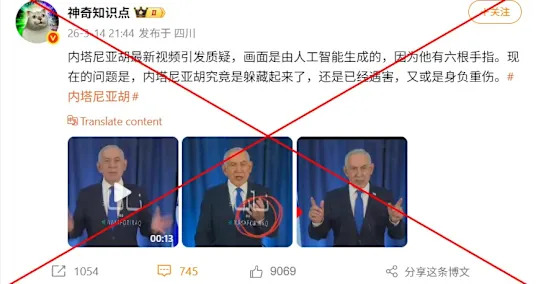
- 3Posts falsely claim Netanyahu video fabricated to cover up his death
- 4Flying without a Real ID? That'll soon cost you $45, TSA says.
- 5Step by step instructions to Protect Your Senior Condo for Ideal Wellbeing and Solace




- Best Amusement Park in Europe: Where Do You Very much want to Visit?
- The Excursion to Monetary Proficiency: Individual budget Triumphs
- Why most Jewish Israelis back the death penalty for terrorists
- China and Pakistan issue five-point peace plan for Middle East
- Improving as a Cook: Culinary Experiences in the Kitchen
- Kona SUV: The Courageous Minimized That is Catching Hearts Around the world
- Fisherman Attacked by Great White Shark Says ‘My Left Foot Was in His Mouth’
- Germany records first wolf bite on human since repopulation
- 10 Energizing Vocations in the Innovation Business