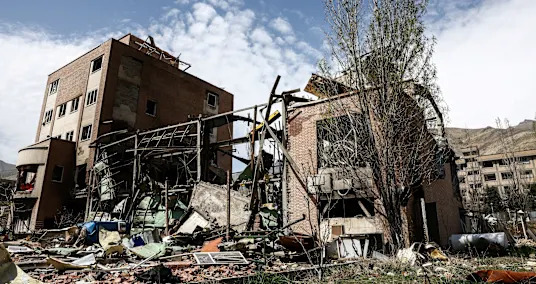
In Tehran, a city of nine million people, schools are closed, businesses are shuttered or struggling, and locals are living without a functioning air-raid warning system or public shelters. In many areas, the first sign of an incoming strike is the explosion itself.
There have been twice as many US and Israeli attacks on Iran compared to the number of Iranian retaliatory strikes since the war began — and the numbers killed in Iran have been orders of magnitude greater than in the neighboring Gulf states. A nationwide internet blackout, now entering its second month, has left civilians unable to access information about safety, shelter, and food and has meant some are unable to work. But while millions have fled Iran’s cities, many more are staying where they are. Some residents are hoping the US and Israeli bombs will cause the regime to collapse; others are left wondering if they are at risk if their neighbors are targeted.
For the many Iranians with ties to Dubai, there are other pressures, with Iranian nationals now barred from entering or transiting through the UAE. Residency permits, even for those with long-term Golden Visas, are reportedly being revoked without notice.


 Benihana is 60 years old. Gen Z is lining up.
- ByHeart infant formula recall tied to botulism outbreak puts parents on edge
- Sought-After Extravagance Ocean side Objections for a Lovely Escape
- Can humans have babies in space? It may be harder than expected
- Virtual Domains d: A Survey of \Inundation and Ongoing interaction Mechanics\ Computer game
- Cocaine, caffeine, painkillers consumed by sharks in Bahamas, study finds
- 10 Hints and Deceives to Expand Cell Phone Information Use: Capitalize on Your Information
- Earth’s magnetic field protects life on Earth from radiation, but it can move, and the magnetic poles can even flip
- The Way to Monetary Freedom: A Viable Aide